
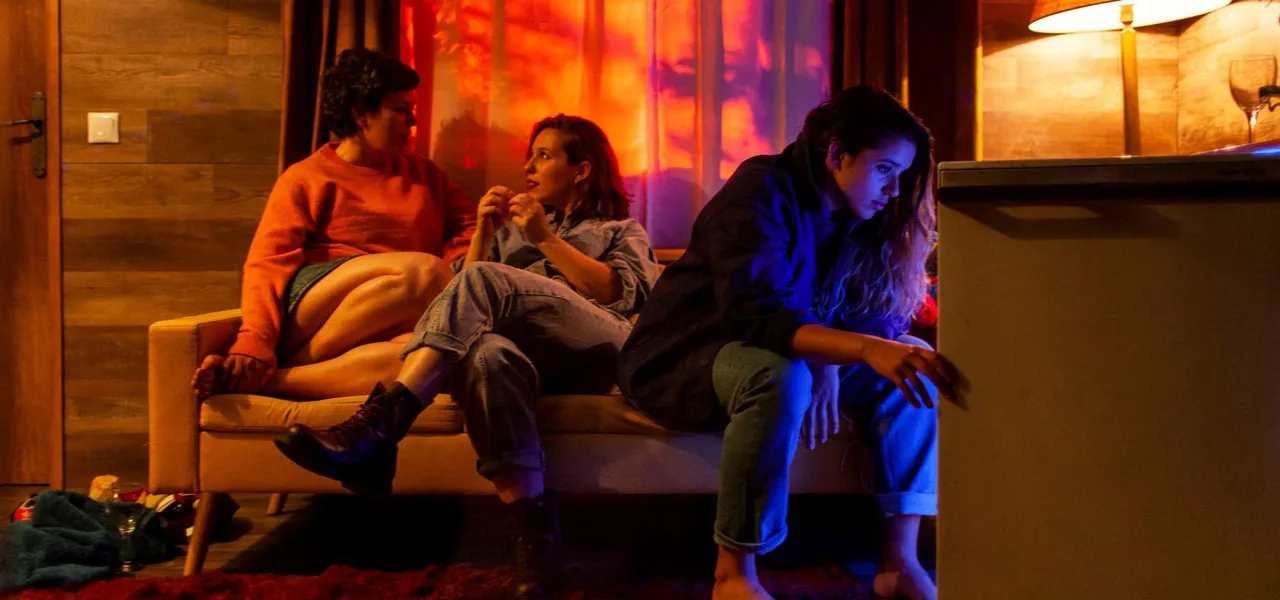
I invite you to imagine a spring night, a Friday night in a small cottage. Three young girls, three cousins around thirty who meet there for the first time after a long period of absence. They drink, they laugh, they dance, and they catch up.
During this ambient of merriness, one of the cousins suddenly states a shocking revelation: “I received a phone call some days ago. They found a corpse near the river. Do you really know what happened to grandpa?”. This statement disturbs the night. We have been unaware of the war, of the story behind our grandparents, but as soon as you discover something, you need to know everything.
A crucial question underlies this work, its dances, its conversations, and its laughs: What did they suffer at our age? Are we alive thanks to their struggle?
We are the grandchildren, the third generation of the war; we have first-hand experienced its consequences. Why do they appear so far in time to us, as if they were a true crime series or a vampires and zombies Hollywood movie? Should we feel guilty of this feeling?
My name is Celso after my grandpa. “It’s a lucky name,” they said. And, until recently, I did not understand why. We reveal it in Las Niñas Zombi with charm and beauty because we believe this story to belong somehow to our whole generation.
Celso Giménez (creation)
Produced by Centro de Cultura Contemporánea Conde Duque, Festival Grec, Grand Theatre de Groningen, Noorderzon Festival, MA Scène Nationale de Montbéliard, Auditorio de Tenerife, Comunidad de Madrid, and La Tristura
Creation
Celso Giménez
Performers
Natalia Fernandes, Teresa Garzón, Belén Martí Lluch
Technical coordination
Roberto Baldinelli
Direction and production assistance
Iván Mozetich
Scenography and dressing
Marcos Morau
Lights
Alván Prado
Video and junk
Albert Coma
Sound space
Adolfo García
Production
Ana Botía, Alicia Calôt, Elena Barrera