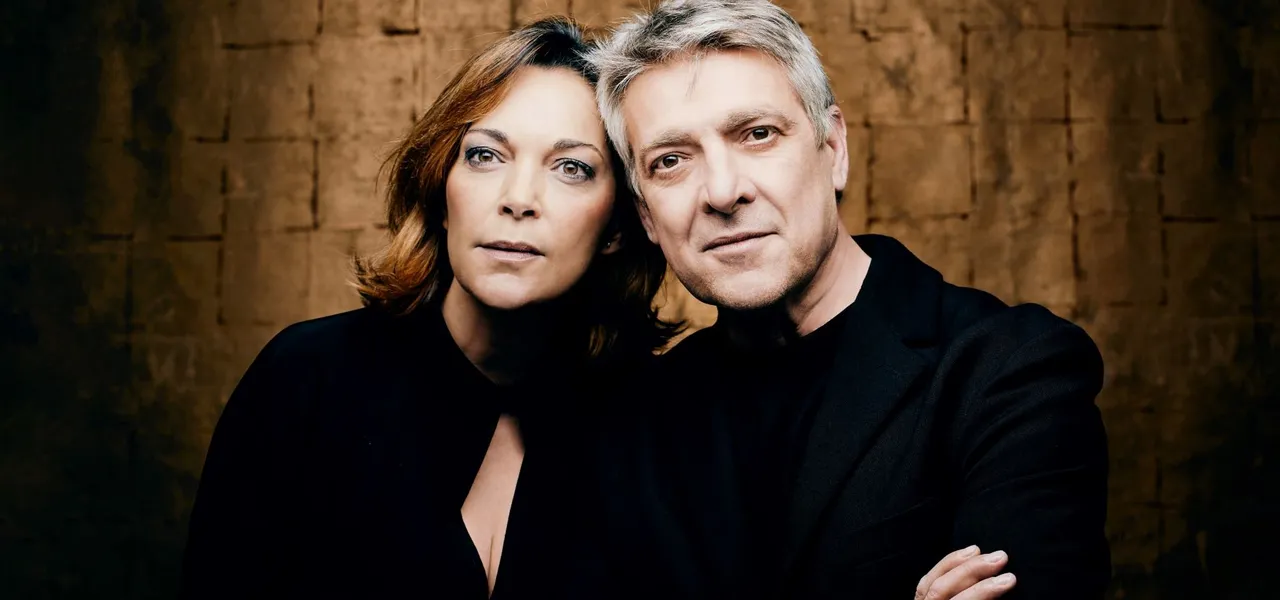
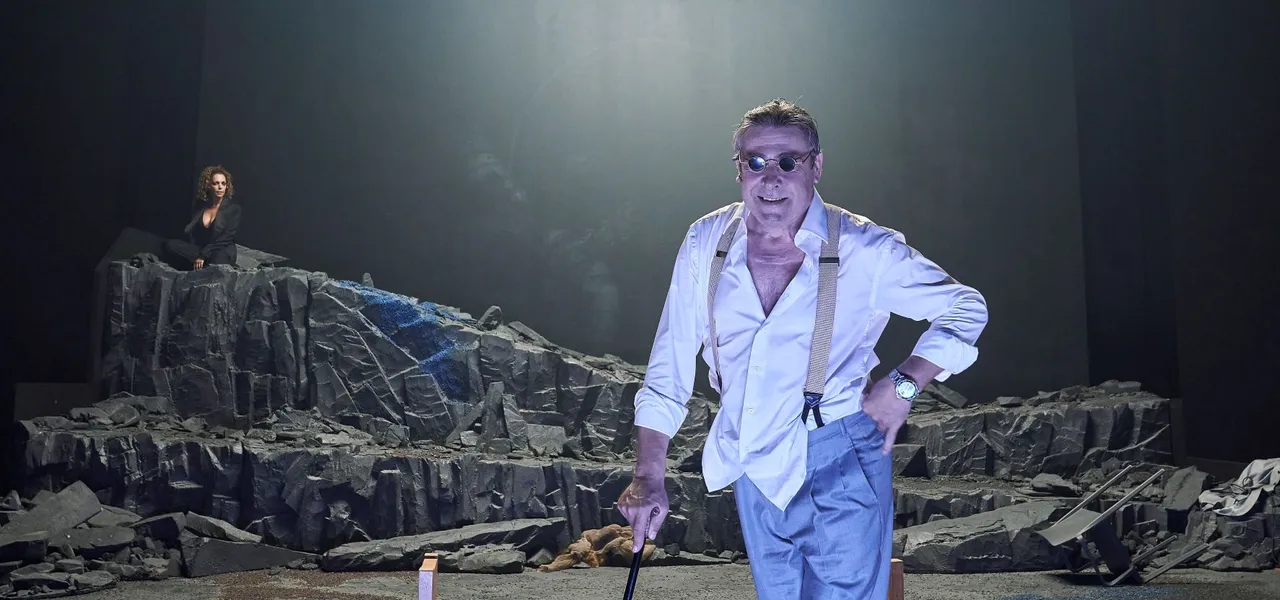
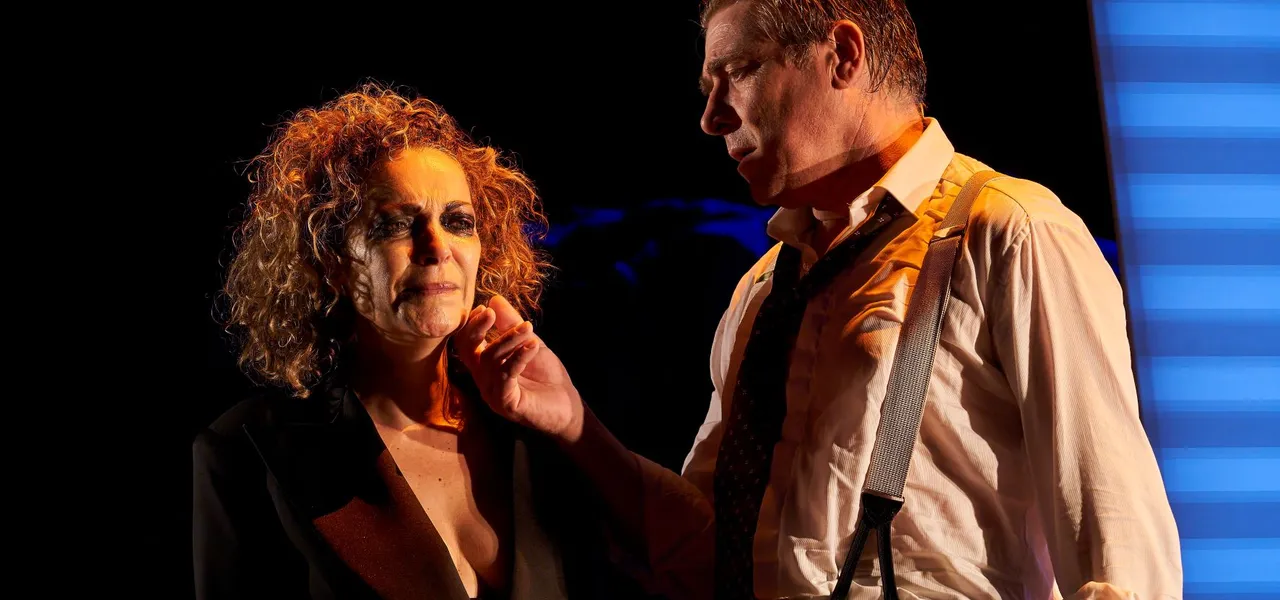
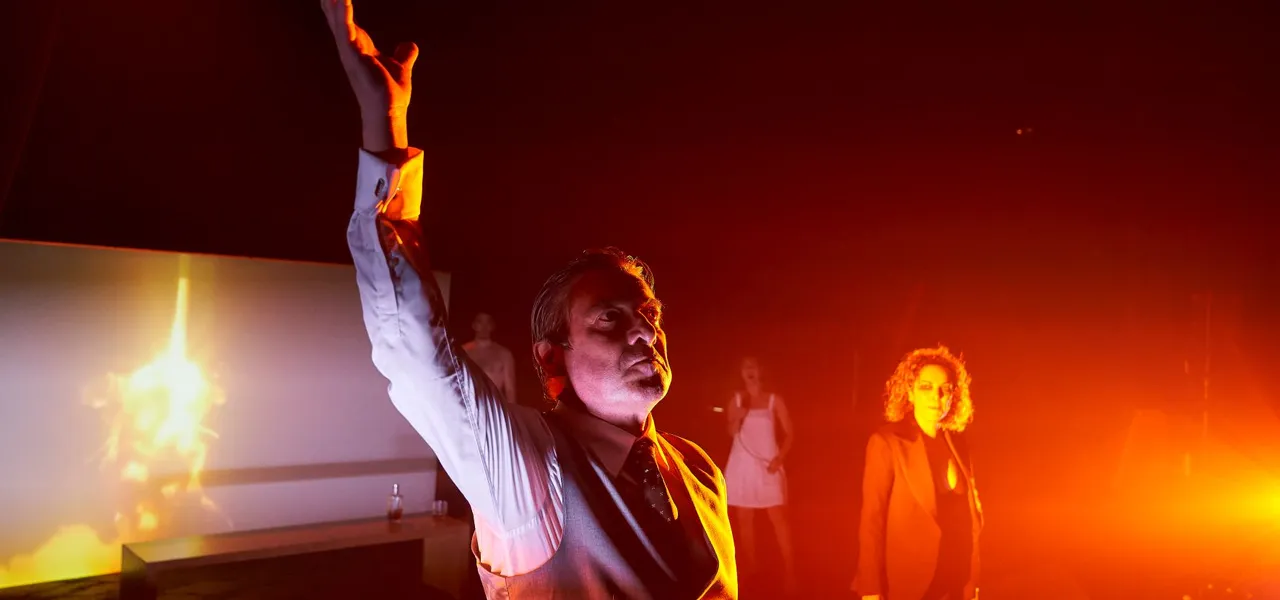
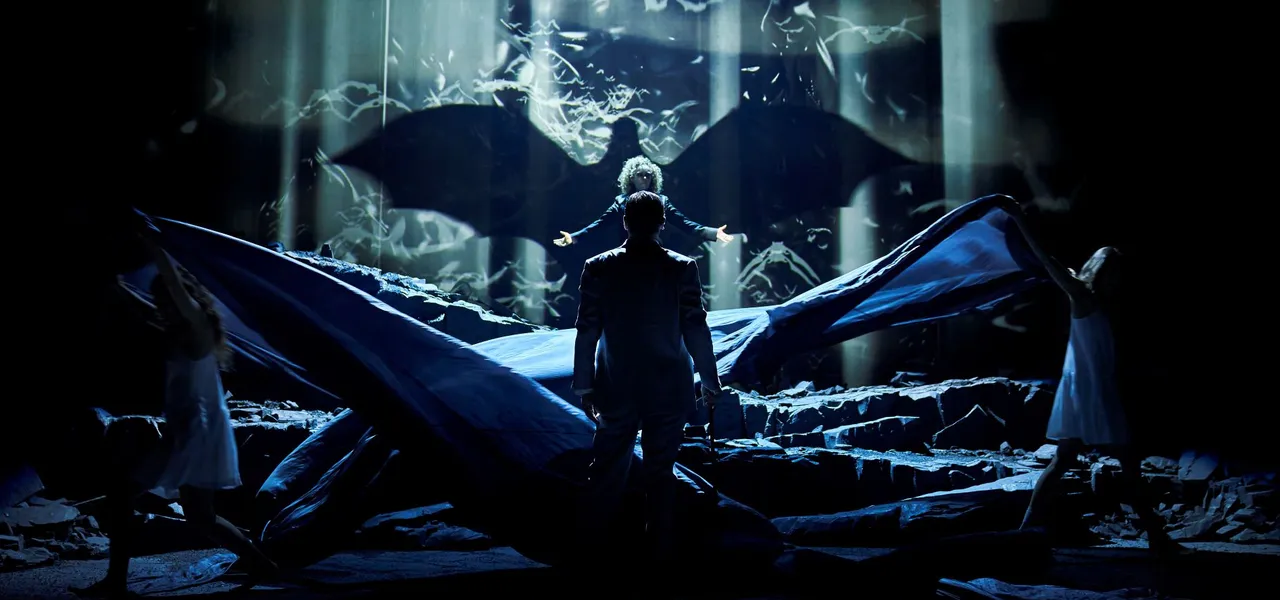
John Milton’s epic poem published in 1667 tells about the tragedy of the fall of man, but also about that of Satan. Milton’s Satan, vindicated by the romantics as the true hero, symbolizes the uprising of the rebel against Heaven’s tyranny. Because, before men fell, there is the story about the Fallen Angel. It is a story about a failed rebellion and about its consequences, a story which will determine man’s and woman’s destiny.
But, are we the way we are because our fate was written like this or because our beliefs made us write it like that? Apart from being a celebration of the beauty of Milton’s language this lost Paradise is also a homage to the comedians’ craftsmanship, so often vilified, despised and demonized as a result of its fascinating capacity for transformation and transgression. Comedians were not allowed to approach cities for they were thought to bring with them a bad influence for the good-willing people. Fear to knowledge is well rooted in ancient times. “Is knowledge perhaps a sin?”, said the snake to the woman. And woman chose knowledge over ignorance, but…
Playwright Helena Tornero, author of this play, claims that she wanted to offer the audience the possibility to feel part of the performance, letting them travel to the other’s place through Milton’s words. By doing this, the spectators will discover how much of an angel, devil, man, woman, comedian or spectator lies hidden within each one of us.
Text
Helena Tornero, from John Milton’s Paradise Lost.
Director
Andrés Lima
Cast
Pere Arquillué, Cristina Plazas, Lucía Juárez, Rubén de Eguia, Elena Tarrats, Laura Font
Scenography and costumes
Beatriz San Juan
Lighting
Valentín Álvarez (AAI)
Original music and sound space
Jaume Manresa
Video production and post production
Miquel Àngel Raió
Characterization
Cécile Kretschmar
Photography
David Ruano
#EmocionsEnViu
 Teatreprincipaldepalma
 teatreprincipal
 teatreprincipal